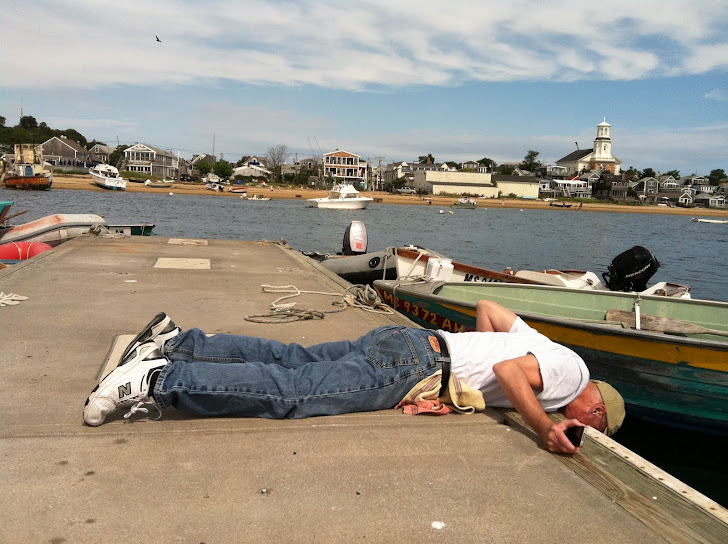
Monitoring at MacMillan Wharf, Provincetown, MA

Monitoring at MacMillan Wharf, Provincetown, MA
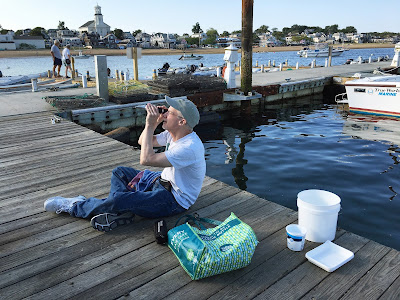
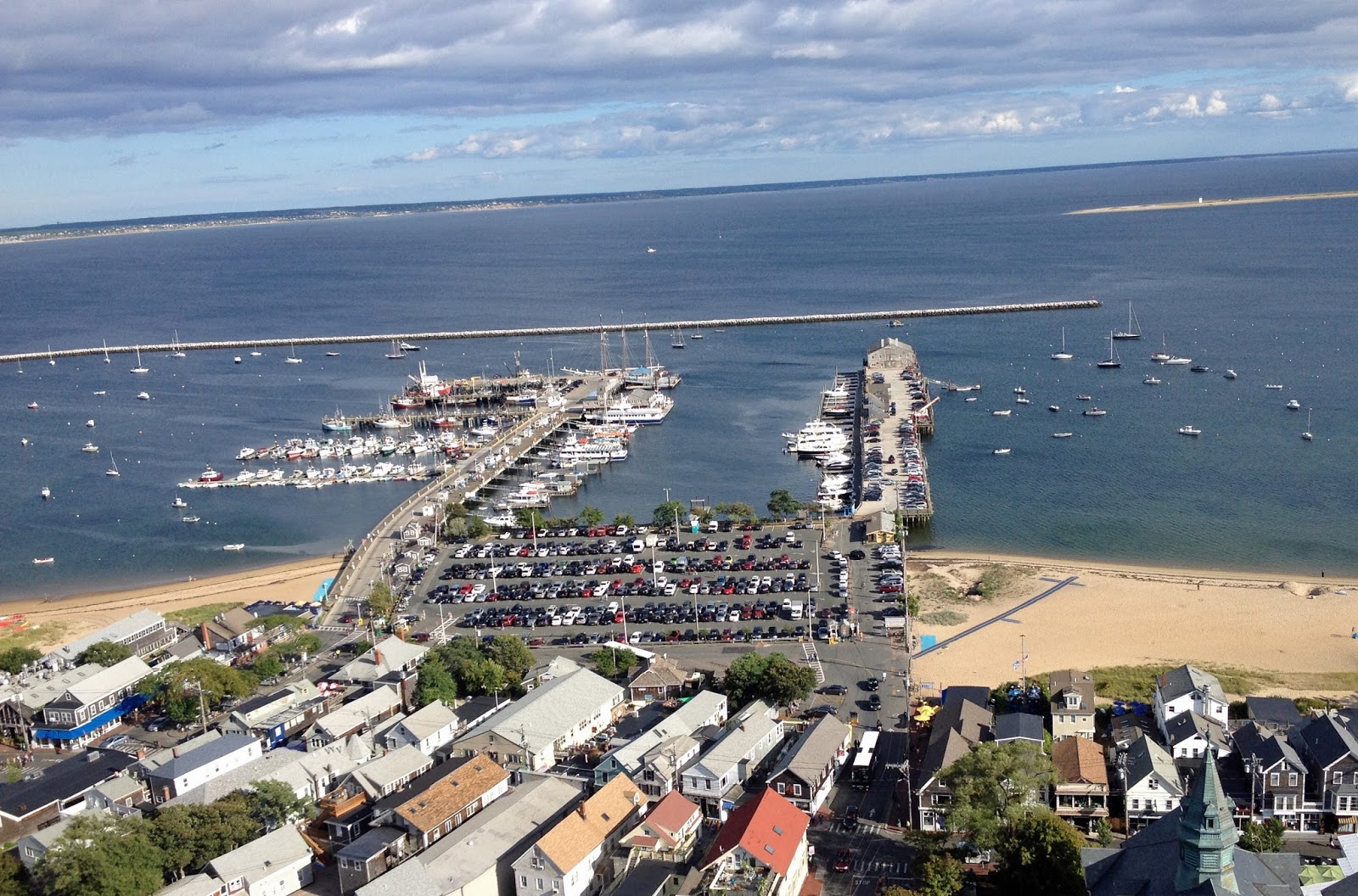
Marine Invasive Species (MIS) Monitoring at MacMillan Wharf, Provincetown, MA.

Tuesday, April 30, 2013

Japanese Tsunami Floating Docks

Asian Species Arrive on West Coast Shores

Recently, it has become a regular occurrence that another piece of debris with attached marine species arrives on the shores of Washington and Oregon as a result of the 2011 Japanese tsunami.   These reports are fascinating from several perspectives: dispersal of marine species following natural events, a glimpse at Pacific species, and the effect of transatlantic travel on species distribution.  Four large docks were washed away from Misawa, Aomori Prefecture, Honshu.  One was found in Japan, two have arrived in the United states, and one is still unaccounted for.  It will be interesting to learn how this process unfolds in comparison to the much different process of marine species on ships that travel from port to port. Their time at the shore was limited because they took a few days to permanently wash ashore and because they were immediately cleaned and removed from the area.  These docks had their greatest potential to impact the open coast because marinas and bays are relatively few in number or protected from the open coast.
  
The first dock arrived in Oregon on June 4th, 2012, at Agate Beach, Newport. This was a large dock densely covered with attached algae and marine invertebrates.  Coincidentally, Newport is the home of the Hatfield Marine Science Center of Oregon State University and The Oregon Coast Aquarium.  It was a ideal situation for documenting the species and studying their impact on the surrounding areas. Since then, another floating dock was reported washing ashore December 16-18, 2012, in a remote location along the Washington coast near Mosquito Creek on the Olympic Peninsula.  The docks had followed the predicted path of debris from Japan based on prevailing currents, winds, and storms, but they arrived at North America slightly ahead of schedule.  
 
Several research groups and experts are participating in identifying the species on the docks, especially the Agate Beach dock which has over 150 species and was densely covered.  Each list is posted on the web and is periodically updated (see LINKS).  It will be worth following during the upcoming months to see what species appear as the story unfolds.  Several Gulf of Maine MIS species were also seen on the docks including Styela, Didemnum, Grateloupe, and Caprella.  Some invasive species were also seen that are already on the West Coast, including the bryozoan Watersipora subtorquata and the Mediterranean mussel Mytilus galloprovincialis.  Several encrusting and upright bryozoans were identified.  Cryptosula pallasiana and Watersipora subtorquata are encrusting forms with distinctly different enclosures from Membranipora or Electra (see links and images below), and Tricellaria sp and Scruparia sp are beige branching forms structurally different from our Bugula species.  
 
Perhaps one of the most interesting findings from my perspective was the presence of numerous stalked, pelagic gooseneck barnacles that settled on the dock during the trip across the Pacific. Pelagic barnacles are normally found attached by their flexible stalks to floating timber, the hulls of ships, piers, pilings, and seaweed. Lepas anatifera has a cosmopolitan distribution and is found in tropical and subtropical seas worldwide. Because it is attached to floating objects carried by oceanic currents, it is ofter found in colder seas where the waters are too cold for them to reproduce. It will be interesting to learn what other species were acquired during the trip, whether species that were established on the docks were lost or diminished in density during the journey, or whether other species became more dominant due to more advantageous conditions.
 
Location of the Floating Dock on Agate Beach, Newport, Oregon
Satellite view of Western Oregon over Newport, Oregon showing location of the Misawa dock represented by the yellow rectangle.  Red star:  location of Hatfield Marine Science Center and Oregon Coast Aquarium.  

Predicted Path of Debris From the 2011 Tsunami Around the North Pacific
NOAA's OSCURS (Ocean Surface Current Simulator) is a numeric model for ocean surface currents that predicted the movement of marine debris generated by the Japan tsunami.  Debris drifted more rapidly than anticipated, reaching Alaska first and then Oregon in 2012.  The model shows that once the debris reaches the eastern Pacific, it can either pass through the California current and reach the coast, or get caught in the current and travel south.  More southerly, the current turns west and debris moves west traveling back to the west Pacific.  Time sequence progresses as follows:  Red, Orange, Yellow, Turquoise, Magenta.

Japanese Floating Dock on Agate Beach, Newport, Oregon
The Misawa dock came to its resting place on a long sandy beach.
(Credit: David Appell)

Marine Growth on the Dock at Agate Beach
 An initial survey found a variety of species of barnacles, starfish, urchins, anemones, amphipods, worms, mussels, limpets, snails, solitary tunicates and algae. This section shows numerous mussels  (Mytilus galloprovincialis ) and brown algae. 
M. galloprovincialis also occurs on the West Coast of America. 

Chart of Marine Organisms on the Agate Beach Oregon Floating Dock
Chart of several of the species found on the Agate Beach Floating Dock.  A large diversity of species was found. The solitary tunicate on the left looks like a pair of Styela clava.  Encrusting and pelagic barnacles are shown in the upper right.
 
Japanese Floating Dock near Mosquito Creek, Olympic Peninsula, WA

Pelagic barnacles settled on the dock during transport across the Pacific.  The side looks nearly covered with the single species, Lepas anatifera

Lepas anatifera Pelagic Barnacles
 
Body divided into two parts: the capitulum which bears the body of the animal and a flexible stalk called the peduncle.  Capitulum has five large calcareous plates.  Plates on the capitulum are smooth or at most finely marked. Upper left, specimens with the cirri withdrawn showing external features - the plate-covered capitulum and the leathery,brown peduncle Upper right, collected specimens with cirri showing morphological diversity.  Bottom, underwater image showing orange tissue-lined pearly white plates and fully extended cirri ready for feeding.

LINKS:
Oregon
Oregon State Japanese Tsunami-Generated Floating Docks Website.  Gives updated information on the research and species list.  http://blogs.oregonstate.edu/floatingdock/
ANS (Aquatic Nuisance Species) Task Force.  http://anstaskforce.gov/Tsunami.html
Oregon State Tsunami Debris Hotline: Huffington Post ongoing dialogue of reports and replies.
Agate Beach Tsunami Dock Species List.  Gives updated species information.
Tsunami Floating Dock
Preliminary Species List : As of January 1, 2013 
Marine Organisms Found Living on a Floating Dock from
Misawa, Aomori Prefecture, Japan Dislodged by the 2011 Tōhoku Earthquake and Tsunami and Washing Ashore on June 4, 2012 at Agate Beach, Lincoln County, Oregon
------------

Washington
Washington Tsunami Debris: Olympic Peninsula Dock.  Huffington Post Report.
Washington Coast Tsunami Dock.  NOAA web report.
Species List Washington Misawa Tsunami Floating Dock.  Gives updated information. 
Tsunami Floating Dock: Misawa 3
Olympic National Park
(JTMD-BF-8)
Species List: As of January 15, 2013
Marine Organisms Found Living on a Floating Dock from
Misawa, Aomori Prefecture, Japan, Washed Out to Sea on March 11, 2011,and
Washing Ashore December 16-18, 2012 near Mosquito Creek, Jefferson County,
Olympic National Park, Washington
------------
Bryozoa
Encyclopedia of Life (EOL): Cryptosula pallasiana. Overview of the species.
The Exotics Guide:  Non-native Marine Species of the North American Pacific Coast.  Watersipora subtorquata.  Detailed description of the taxonomy, structure, and distribution of the species.
Watersipora subtorquata is an invasive species that has also spread to the US Pacific coast. Top, View of an orange colony from San Francisco Bay (Luis A. Solórzano).  Bottom left,   Closeup of Watersipora subtorquata zooecia showing the black opercula and the fine black lines where the zooecia join (California Academy of Sciences).  Bottom right, SEM image showing fine structural detail.
Encyclopedia of Life (EOL): Tricellaria. Genus overview. 
Tricellaria inopinata D'Hondt & Occhipinti Ambrogi, 1985
Encyclopedia of Life (EOL): Scruparia. Genus overview.
Scruparia chelata Linnaeus, 1758, is a white colony with creeping stolons
and upright chains of zooids
------------
Mussels:
Wonham, NJ. Mini-review distribution of the Mediterranean mussel Mytilus galloprovincialis (Bivalvia: Mytilidae) and hybrids in the Northeast Pacific.  J Shellfish Res, 23: 535–543, 2004.
------------
PelagicBarnacles:
MarLINCommon Goose Barnacle:  Lepas anatifera
EOL Encyclopedia of Life:  Lepas anatifera.
WoRMS World Register of Marine Species. Lepas anatifera Linnaeus, 1758.
------------
Recent News:
Japanese Fish Survive 5,000-Mile Trip across Pacific in Tsunami Boat.  Blue and white striped beakfish survived in the hull of a boat. 

Saturday, March 30, 2013

File Images: Caprella & Palaemonetes

Caprella mutica & Palaemonetes pugio

After the new year, I looked through my collection of stereomicroscopic images to see if any of them might be candidates for posting.  My microscope is an Olympus-like clone with a 0.7-4.5 zoom lens paired with a 10x objective.  As with most dissecting microscopes, it comes equipped with a clear glass stage insert for backlighting as well as an opaque two-sided black/white stage insert.  Many subjects such as algae and branching bryozoa photograph best with white backgrounds for contrast and reflective back lighting, but other species such as colonial ascidians and anemones photograph well with a black background.  Crustaceans also look good on a black background and there were two images in my collection that had an aesthetic appeal.  For seawater specimens, the stage insert was placed at the bottom of the collection tray.  For preserved material, formaldehyde-fixed samples were transferred through alcohols to water and then placed in a container with the black stage on the bottom. Micrographs were taken with a QImaging Micropublisher Digital Camera using QCapture Pro Software.
 
MIS Species Caprella mutica
Specimen of Caprella mutica collected in August 2011 observed against a black background.  In Provincetown, I have not seen Caprella mutica since Tropical Storm Irene, August 28-29, 2011. Stereozoom 0.8 x 10x objective.
 
Marsh Grass Shrimp Palaemonetes pugio
Preserved specimen of Palaemonetes pugio from Wellfleet Marina collected in summer of 2011.  Palaemonetes marsh grass shrimp live among algae and invertebrates attached to the floats and sometimes swim in small schools next to the docks.  Stereozoom 0.7 x 10x objective. 
 
Palaemonetes marsh grass shrimp are common in the western Atlantic Ocean from the Gulf of Mexico to the Gulf of Maine.   Adults are semi-transparent and grow to less than 5 cm (2.0 in) long, with most individuals on the docks 1-4 cm long (including antennae).  They are found clinging to algae and invertebrates on the dock and also can be seen swimming close to the dock.  Several species are found along the North American coast: P. pugio, P. vulgaris, and P. intermedius. Palaemonetes pugio and Palaemonetes vulgaris live north of Nantucket Sound and are common in the Gulf of Maine.  Morphologically, they are very similar, but can be distinguished by the pattern of spines on the rostrum (Anderson, 1985).  The shrimp collected in Wellfleet were identified as P. pugio by examining a group of preserved specimens collected in 2011.  The rostrum of all the specimens had a single, long, dagger-like tip characteristic of P. pugio.
 
Small numbers of the larger MIS shrimp Palaemon elegans can sometimes be found cohabitating with Palaemonetes in marinas (first sighted in Gulf of Maine in Salem Sound in 2010, and sighted in 2012 in Provincetown).  They are difficult to distinguish when they are about the same size as the smaller Palaemonetes, but larger individuals can clearly be distinguished, especially by the presence of blue and orange bands on Palaemon's front legs (see below).   Palaemon also grows several cm larger and is more colorful than Palaemonetes. So when looking for invasive marine species, populations of Palaemonetes are a good place to start by examining Palaemonid shrimp for blue banded legs.
 
Rostrum of Palaemonetes pugio
 Palaemonetes pugio has a dagger-like, pointed rostrum.  Black eye pigment had faded to a light gray in these preserved specimens. Two different individuals are shown. Top, rostrum is visible above the antennae and legs.  Bottom, clear view of the rostrum was obtained by removing the antennae which usually obscure a clear lateral view of the rostrum.  Original images captured using stereozoom 2.0 x 10x objectives.
 
LINKS:
Ashton GV.  Distribution and dispersal of the non-native caprellid amphipod, Caprella mutica Schurin 1935Ph.D. Thesis, University of Aberdeen, 2006(See numerous publications about Caprella mutica by Ashton et al since 2006)
Wiki Webpage on Caprella mutica:  Japanese skeleton shrimp.
Native Range of the Japanese Skeleton Shrimp Caprella mutica.
Native range in the Western Pacific along the coasts of Russia, Japan, and Korea.  Circles represent locations where Caprella mutica was found. 1) Peter the Great Bay, 2) Possjet Bay, 3) Olarovsky Cape, 4) Signalny Cape, 5) Sea of Okhotsk, 6) Kunashir Island, 7) Shikotan Island, and 8) Akkeshi Bay.
Rowe, CL. Differences in maintenance energy expenditure by two estuarine shrimp (Palaemonetes pugio and P. vulgaris) that may permit partition of habitats by salinity. Comp Biochem Physiol Mol Integr Physiol. 132: 341-351, 2002. 
Anderson, G. Species profiles: Life histories and environmental requirements of coastal fishes and invertebrates (Gulf of Mexico) - Grass Shrimp.  US Fish Wildl Serv Biol Rep  82:  19 pp, 1985.
Comparative morphology of different grass shrimp species showing the rostrum of 
Palaemonetes pugio (a) and P. vulgaris (g).   P. pugio has a dagger-like, pointed rostrum, whereas the rostrum of P. vulgaris has a multi-spined, serrated tip.  
Gosner, KL. A Field Guide to the Atlantic Seashore from the Bay of Fundy to Cape Hatteras. Palaemonetes Species. 234-236, 1978.  The Peterson Field Guides.
Descriptions of P. pugio, P. vulgaris, and P. intermedius.   Web Preview of the Guide.
Comparative rostrum morphology of the three grass shrimp species found in New England.
EOL, Encyclopedia of Life: Palaemonetes pugio
     "The daggerblade grass shrimp, Palaemonetes pugio, is a small transparent to shrimp with a well-developed rostrum bearing several dorsal as well as three distinct ventral teeth, a smooth carapace and abdomen, and two pairs of chelate (claw-bearing) walking legs, the second pair more robust than the first. It has well-developed eyes with globular pigmented corneas and some slight yellow pigmentation in the eyestalks".
WoRMS, World Register of Marine Species: Palaemonetes pugio Hothuis 1949
EOL, Encyclopedia of Life: Palaemonetes vulgaris
WoRMS, World Register of Marine Species:  Palaemonetes vulgaris (Say, 1818)
Typical view of semi-transparent Palaemonetes vulgaris as seen from above. The pairs of black eyes are one of the most distinctive features.
EOL, Encyclopedia of Life: Palaemon elegans 
Blue and orange bands on legs of the European rock shrimp Palaemon elegans
Pedersen, J.  Invasive Species Survey Discovers First European Marine Shrimp to Invade North America.  Invasive Species of Eastern USA Blog, August 2010.

Wednesday, February 27, 2013

Cape Cod Bay Monitoring News

PCCS Releases It's Cape Cod Bay Report

The Provincetown Center for Coastal Studies announced the release of its report, entitled "How is Our Bay? Five Years of Environmental Monitoring of Cape Cod Bay" by Amy Costa and Pat Hughes, on the five-year (2006-2010) analysis of water quality in Cape Cod Bay,   

Initiated back in 2006, the Cape Cod Bay Monitoring Program focused on the environmental status of the Bay.  Staff scientists and volunteer monitors measured several parameters including temperature, oxygen, chlorophyll, nitrogen, phosphorus, and turbidity.  An excess of nitrogen and phosphorous leads to eutrophication of the Bay, which manifests itself by an increase in algae which can be measured by the presence of chlorophyll a.   Eutrophication can lead to a decrease in dissolved oxygen which adversely affects marine life.  Turbidity reflects the amount of suspended solids in the water, i.e., the overall clarity, that might be the result of coastal erosion, runoff, waste discharge, or plankton.  Increases in turbidity can impede light penetration which is important to submerged vegetation like eelgrasses.  Monitoring these parameters over the 5-year study will provided data that may be used to assess water quality conditions of the Bay on a continuing basis.

The PCCS also monitored specific ecological niches such as the eelgrass habitat and harbors.  Eelgrass beds act as a refuge for juvenile fish and shellfish, many of which are commercially important species in the region. Diversity and abundance of marine life is greater in areas that support healthy eelgrass, yet eelgrass beds are quite sensitive to disturbance and pollution.  They are also easy to monitor by aerial photography and, therefore, are an ideal habitat to monitor the overall health of the Bay ecosystem. Eelgrass study sites included Plymouth (2 sites), Eastham Flats, Jeremy Point (outside Wellfleet Harbor), and Provincetown.

The PCCS also monitored harbors around the Bay for marine invasive species.  In 2007, the PCCS joined the ongoing Massachusetts statewide CZM marine invasive species monitoring program and reported findings from monitored sites in Sesuit Harbor, Rock Harbor, Wellfleet Marina, Pamet Harbor, and Provincetown.  
 
 Cape Cod Bay Monitoring Stations
Monitoring Stations along the coastline include (from west to east) Pymouth Harbor / Duxbury Bay, Sandwich Harbor, Barnstable Harbor, Sesuit Harbor, Rock Harbor, Wellfleet Harbor, Pamet Harbor, and Provincetown Harbor.  Several offshore sites were also analyzed in the Bay and Nantucket Sound.  
 
Report LINK:  Costa, A, and P Hughes. How is Our Bay?  Five Years of Environmental Monitoring of Cape Cod Bay.  Available as a hard copy and at the PCCS coastalstudies website.


State of Wellfleet Harbor Conference

Around the same time, Wellfleet hosted a conference on the state of Wellfleet Harbor, which was held on November 3rd, 2012.  Some of the topics included are a summary of 10 years of terrapin (turtle) studies, shoreline change in Wellfleet Harbor, shellfish habitat assessment, horseshoe crab management, and understanding the mass strandings of dolphins.  The 10th Annual Conference, November, 3, 2012.
 
Wellfleet Harbor viewed from the east end of the Marina looking south-west toward Great Island.
 
LINKS: 
Three Bays Preservation: Live Water Quality Monitoring Program.  Cape Cod Cooperative Extension
State of Wellfleet Harbor Conference: Program of speakers and presentations.  
Diagram of the Study Site from the Oyster Propagation Project Webpage.
 
 
Photograph of the Spawning Study Area taken at the Exhibit on the North Side of Wellfleet Marina (see sidebar for a photo of the whole exhibit map)
Friends of Herring River: Information about the restoration of the Herring River in Wellfleet.
Association to Preserve Cape Cod:  Cape Cod Water Resources Restoration Project

Wednesday, January 30, 2013

Floating Dock Bryopsid Green Algae

Bryopsis plumosa
 
Any sunny location in a marina is a good place for algae to grow, but the south-facing sides are particularly ideal for a variety of green, red, and brown algae (see Provincetown sidebar photo entitled "Public Dock, South View").  If you are looking for species of green aglae or trying to assess species diversity, it usually means sorting through the vegetation along the water line and on the sides of docks.  The usual subjects include the more commonly observed UlvaEnteromorpha, and filamentous green algae.  

Another common green alga seen on floating docks is Bryopsis plumosa, a branched alga with feather-shaped plumes that arise from a rhizoidal holdfast.  The growing tip sends out side branches which give the branch a pennate structure.  The distinguishing feature of this alga is that it belongs to a group of organisms composed of multinucleated cells referred to as coenocytes.  A coenocyte is a multinucleated cell which can result from multiple nuclear divisions without accompanying cell division, in contrast to a syncytium which results from cellular aggregation followed by dissolution of the cell membranes inside the mass.  Several groups of fungi and green algae, including the Bryopsid species, are coenocytic.  When a Bryopsis branch is damaged or broken, the membrane is punctured and "clotting factors" (specific proteins, organelles and chloroplasts) aggregate at the site of the wound and plug it up. WIthin 15-20 minutes, a gelatinous envelope composed of polysaccharides and lipids develops around the aggregate. A cell membrane and cell wall are subsequently formed around the aggregate as well.   

Bryopsis has a two phase life cycle that alternates between the familiar, macroscopic gametophyte and an inconspicuous, microscopic sporophyte.  This cycle is distinct from many other green algae, such as Ulva, whose gametophyte and sporophyte look identical.  The gametophyte of Bryopsis is coenocytic, but the gametes, spores, and sporophyte are uni-nuclear.  The gametes are biflagellated.  In addition to reproduction from gametes and spores, Bryopsis is also capable of reproduction from algal fragments or extruded protoplasm that lacks a cell wall.  When the multinucleated cells of Bryopsis are injured, the protoplasm that is extruded from the cells can generate new cells.  The coencyte's cell organelles aggregate and secrete a gelatinous envelope and then a cell wall around themselves.  Hundreds of cells can be generated from a broken branch, many of which can develop into new plants. 

Bushy Green Algae Bryopsis plumosa 
Image of Bryopsis from the North Western Pacific, Siberia, Russia,  March, 2012.

A Single Plume of Bryopsis plumosa
The entire plume is a giant multinucleated cell.  Side branches can also branch into a feather-like structure.  Collected from floating docks at MacMillan Wharf in Provincetown, September, 2012.
 
The Growing Tip of Bryopsis plumosa  
Photomicroscopic image of the the tip and outer branches of Bryopsis plumosa collected in Provincetown, September, 2012.  Stereozoom 1 x 10x objective 
 
Coenocytic Branches off the Main Branch of Bryopsis plumosa  
Branches have a homogeneous green appearance that narrows at the junction with the main branch, giving the side branches greater flexibility.  Collected in Provincetown, September, 2012.  Stereozoom 4 x 10x objective

Life Cycle of the Biphasic Green Alga Bryopsis

The life cycle of Bryopsis involves the alternation of two heterothallic stages:  the familiar, macroscopic gametophyte and the inconspiruous, microscopic sporophyteBryopsis can also reproduce by fragmentation of microthalli. 
 
PUBLICATIONS AND LINKS:
MarLIN: The Marine Life Information Network, Biodiversity & Conservation. Descriptions of major taxonomic groups.  The life cycle of homothallic green algae such as Ulva is contrasted to Bryopsis.
Burr, FA, JA West.  Light and electron microscope observations on the vegetative and reproductive structures of Bryopsis hypnoides. Phycologia 9: 17-37, 1970.
       Abstract (excerpt):  "The vegetative system of the coenocytic alga Bryopsis hypnoides has a large central vacuole which extends throughout the body of the plant. This vacuole occupies most of the volume of the thallus, leaving only a thin layer of cytoplasm appressed to the cell wall. Numerous evaginations of the vacuole penetrate the cytoplasm. In the mature parts of the thallus the cytoplasm is divided into two definite layers: the outer layer adjacent to the cell wall contains most of the organelles excluding only the chloroplasts, which are present in the inner layer next to the vacuole."
Kim, GH, TA Klotchkova, YM Kang.  Life without a cell membrane: regeneration of protoplasts from disintegrated cells of the marine green alga Bryopsis plumosa.  J Cell Sci 114: 2009-2014, 2001.
Regeneration of protoplasts from a broken branch.
Takahashi, F, K Yamaguchi, T Hishinuma, H Kataoka.  Mitosis and mitotic wave propagation in the coenocytic alga, Vaucheria terrestris sensu Goetz.  J Plant Res 116: 381–387, 2003.  (Images of the morphology of coenocytic nuclei and microtubules during the different stages of mitosis in a green alga completely unrelated to Bryopsis)

Coenocytic nuclei in the growing tip of Vaucheria terrestris sensu Goetz, another coenocytic alga.  a) photomicrograph of a growing tip and b) nuclei in the same region stained with a blue dye.
Monterey Bay Aquarium Research Institute:  Marine Botany. Bryopsis morphology.
Algaebase.  Bryopsis.  Description of the genus.
Algaebase.   Bryopsis plumosa.   Database on the species.
The Reef Tank: Marine Benthic Macro-Algae (MaBMA) Catalogue.  Bryopsis.  Description of species and life cycle.
University of Hamburg Biology Website:  Morphological Diversity within the Algae.  Descriptions of the structure of coenocytic algae like Bryopsis and parenchymatous algae like Ulva or Enteromorpha.  
Queen's University Belfast Biology Website:  Morphogenesis in the Green Algae.  Ulva and Enteromorpha.
Growth of parenchymatous green algae from a single progenitor cells by cell division into multicellular sheet or tube. 
Gulf of Mexico Integrated Science:  Tampa Bay Reports. Characterization of Epiphytes on Seagrass in Tampa Bay. 
Enteromorpha showing 1) macroscopic structure,  2) cross section showing single cells, and 3) surface view.  
Algaebase.  Description of Ulva species: Ulva rigida.
Microscopic section through an Ulva species showing 2 cellular layers
containing chloroplasts
Marevita - Algues et Plantes Marines - Chlorophyta: Bryopsis plumosa.
WoRMS: World Registry of Marine Species. Bryopsis plumosa (Hudson) C. Agardh, 1823.

Sunday, December 30, 2012

Branching Bryozoa and Red Algae

Bugula neritina and Neosiphonia harveyi

One of the issues facing a biologist out in the field when trying to identify marine species is matching the photographs in guides with what is seen with fresh material.  Guides do not give examples of all the different morphological or color variants.  Nor do they show the appearance of species at different ages (sizes) or stages of the life cycle.  In my experience, an unfamiliar species may require a few occasions to sort out the distinctions.  This was the case for me with Bugula neritina.  It has an algae-like, bushy growth pattern and is sometimes not abundant enough to form an immediate identification.  Using a 30x or 40x hand lens in the field or bringing samples back to the lab for microscopic confirmation have been a big help.  In due time, the identification process gets refined.
 
Among the red algaes, Neosiphonia harveyi is one species that can cause confusion when attempting to identify Bugula neritina, especially when the specimens are young (only a few cm in height) and neither of them has developed reproductive structures.  Side by side in a collection tray, the macroscopic differences can be easily discerned.  Under a microscope, however, the structural differences are crystal clear.  Bugula has serrated edges and  alternating biserial growth.  It is an animal with moving, feeding lophophores that contract down into their enclosures at the slightest disturbance and then slowly reappear to resume feeding (very entertaining).  Neosiphonia is a plant that has smooth, striped, non-moving branches (thalli) with pointed tips.  Each of the two species has unique, visible reproductive structures.  Bugula has white ovicells along mature branches, whereas Neosiphonia has pod-like carposporangia, both of which can been seen with the naked eye or hand lens.

Neosiphonia harveyi, previously classified as Polysiphonia harveyi (Choi et al, 2001), is a multicellular red alga with two macroscopic phases to its life cycle: a haploid, reproductive structure that produces gametes and a diploid form that produces spores for asexual reproduction.  The multicellullar branches in both stages of Polysiphonia and Neosiphonia species are composed of 5 primary cells in cross section, one central and 4 peripheral (see Algaebase link below).  Both stages look the same, i.e. they are isomorphic, and in Neosiphonia, the male and female structures are produced on the same plant.    
 
Bugula neritina and Neosiphonia harveyi with Similar Appearance and Size 
Wine red specimens of Bugula neritina (left) and Neosiphonia harveyi (right) collected from MacMillan Wharf in Provincetown, September, 2012.  Both the bryozoan and red alga branch with a similar bifurcating pattern, but branches of Bugula appear thicker and serrated.  Neosiphonia has a filamentous appearance but is actually composed of multicellular thalli (red algal fronds).  Neither specimen has conspicuous reproductive structures.
 
Microscopic View of Terminal Branches of Bugula neritina
Alternating zooids along the branch of Bugula with a cluster of feeding lophophores at the terminal end.  Each branch is two rows of zooids wide.  Serrated edges and alternating zooids can be with a hand lens.  Lophophores can also be seen with a lens on resting colonies in a shallow dish.  Stereozoom 4 x 10x objective.
 
Microscopic Views of Thalli of Neosiphonia harveyi
 Specimen was collected from Provincetown, September, 2012.  The segmented branches have red longitudinal and inter-segment bands. This structure can be seen with a 30x hand lens.   Branch ends taper to a tip.  Stereozoom 4.5 (upper) and 4.0 (lower) x 10x objective.
 
Neosiphonia harveyii Thalli with Carposporangia
 Specimen was collected from Wellfleet, July, 2011.  Carposporangia containing the newly fertilized (diploid) carposporophyte are located on short branches off the thallus.  The carposporophyte produces carpospores which are released into the sea water. 
 
Neosiphonia harveyii Growing as an Epiphyte on Grateloupia turuturu
Neosiphonia harveyi can be found growing as an epiphyte on several different algae.  Here it is seen on the MIS invasive species Grateloupia turuturu, which is becoming more common in the Gulf of Maine, especially in late summer.  From MacMillan Wharf, Provincetown, September 2012.
 
LINKS:
MarLIN: The Marine Life Information Network, Biodiversity & Conservation.  Descriptions of major taxonomic groups.  
The life cycle of red algae involves the alternation of three stages: the gametophyte, the carposporophyte, and the tetrasporophyte.  Typical red algae have separate male and female gametophytes, but Neosiphonia has both on the same plant.  The carposporophyte is microscopic and attached to the gametophyte.
Algaebase.  Neosiphonia harveyi (J.W. Bailey)Database of information on algae, especially marine algae.
Colorized cross section through a thallus showing cellular structure.
Plant Physiology Information Website by Ross E Koning: Kingdom Rhodophyta: Neosiphonia harveyi.  The life cycle is described and well illustrated.
Carposporangia on haploid plants contain a microscopic diploid carposporophyte after fertilization.
Marevita (Sea Life) - Algues et Plantes Marines - Rhodophyta:  Neosiphonia harveyi
 
Tetrasporangia spiral along the diploid thallus.  Carposporangia are produced on short stalks off the haploid thallus. (Photo credit: Andre Rio)
PUBLICATIONS:
Choi, H-G, M-S Kim, MD Guiry, and GW Saunders. Phylogenetic relationships of Polysiphonia (Rhodomelaceae, Rhodophyta) and its relatives based on anatomical and nuclear small-subunit rDNA sequence data. Canadian Journal of Botany 79: 1465-1476, 2001.
Morphological features of the A) thallus, B) rhizoid, C) carpogonium D) spermatangia, and E) tetraspores of i) Polysiphonia, iii) Neosiphonia, and ii) a multicentral relative.
Phylogenic relationships and reclassification of Polysiphonia harveyi as
Neosiphonia harveyi based on morphological criteria
Mathieson AC, JR Pederson, CD Neefus, CJ Dawes, and TL Bray.  Multiple assessments of introduced seaweeds in the Northwest Atlantic.  ICES Journal of Marine Science, 65: 730–741, 2008.